What Is Cá Lóc Nướng Trui: Six Stations, Pond to Table
Nướng trui means grilling the fish whole, scales on, in burning straw. Six stations: pond, straw, fire, peeling, wrapping, dipping. Why the skin burns.
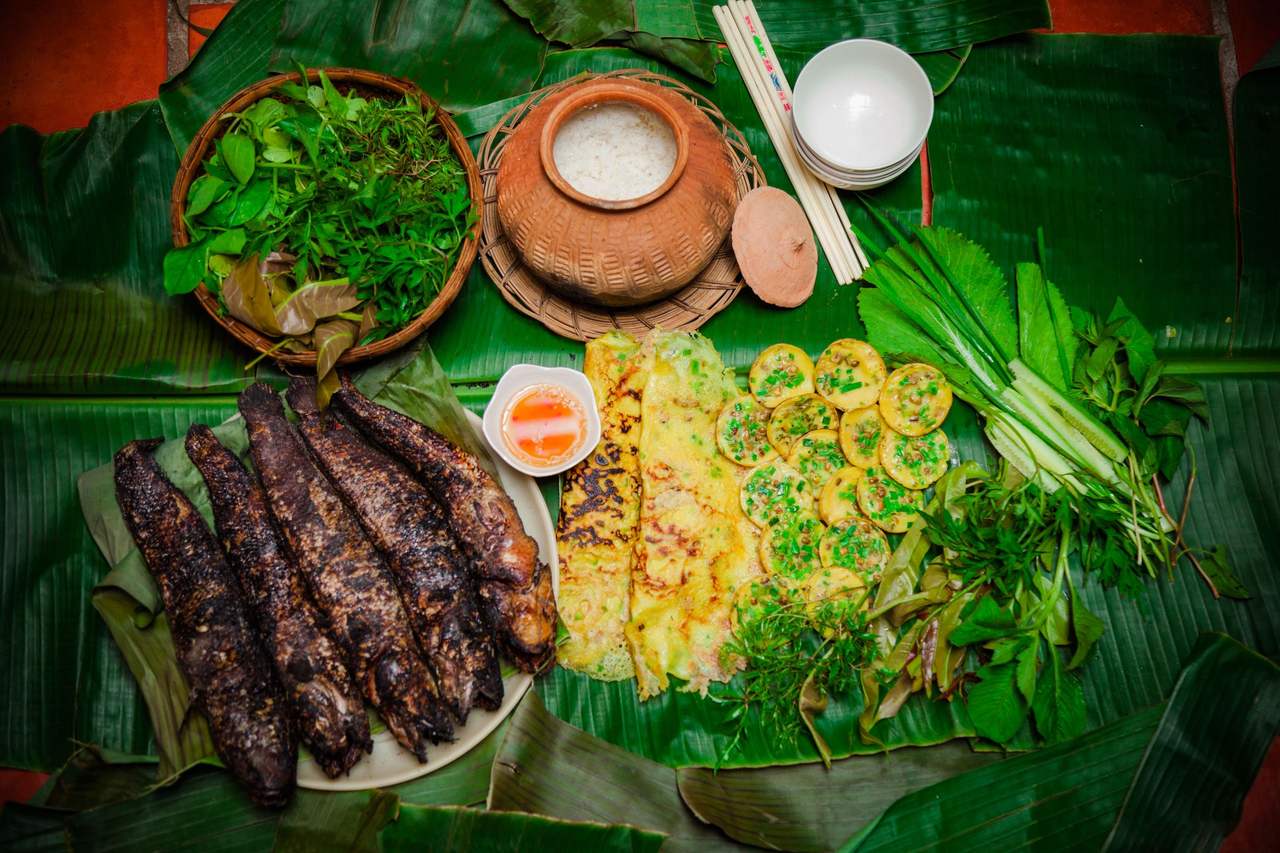
Cá lóc nướng trui is snakehead grilled whole, scales on, buried in burning straw until the outside is charred black and the flesh inside is cooked white. At Bếp Rơm one fish weighs about 800 g and costs VND 358,000 (8% VAT included), with mild heat (level 1 on a 0 to 3 scale), and it contains fish. I am Tư, the fire keeper. I have grilled snakehead since I was young, and this piece follows one fish through six stations in our kitchen, from choosing it to the bowl of mắm nêm.
Where nướng trui began is a question for historians. I can only tell you how I do it at this fire counter, every day.
Station one: the pond
It starts with the fish. We choose snakehead of about 800 g. At that size one fish is right for a table of four eating other dishes too, as in the family mâm, and it is big enough to have thick flesh that still cooks evenly when grilled whole. For the kitchen’s ingredients in general, see the ingredients page.
Station two: the straw
The straw is dry rice straw, and it gives the restaurant its name: a bếp rơm is a country stove fired with rice straw. Straw burns fast, flaring up and dropping quickly. That is why the fire keeper cannot walk away: I always keep wood beside the straw to hold the embers when the straw falls. We use both: straw for the flare and the smoke, wood to hold the heat longer.
Station three: the fire
The fish is buried or covered in burning straw, not laid on a rack. This is where nướng trui differs from ordinary grilling: no one side sits on a hot bar. The fire surrounds the whole fish. The scales and skin act as a shell: they burn, but the flesh beneath is kept in the fish’s own heat, so it cooks without drying. That is why the fish is black outside and white and sweet inside.
I do not publish a number of minutes. It depends on the size of the fish, how the straw is burning that day, and when I add wood; I judge by eye and by hand, not by a timer. If someone gives you one fixed time for every fish, ask them again.
Station four: peeling
The fish comes out with scorched scales. I peel off the scales and burnt skin at the fire counter, so guests sitting there see it: under the black is white flesh, still hot and steaming. The burnt skin is not eaten. We serve the flesh on a plate, the whole fish.
The fire counter has 8 seats facing the grill, for parties of 1 to 4, 75 minutes a seating. It is the one place to see this station with your own eyes; at other tables the fish arrives already peeled. Book the counter on the reservation page.
Station five: wrapping
The fish comes with rice paper, fresh herbs and lettuce. You wrap it yourself: a piece of fish, a few leaves, a sheet of rice paper. Wrapping is how the whole table eats, so cá lóc nướng trui suits tables of two to six, shared.
Station six: dipping
Last comes the bowl of mắm nêm: a fermented anchovy dip pounded with pineapple and chilli. It is salty, sweet-sour and a little hot; it cuts the smoke of the fish and brings out the sweetness of the flesh. The dish lists fish as its allergen, since both the snakehead and the mắm nêm are fish. Spice is level 1; you can ask for it to be lowered or the chilli served on the side, as with every dish except lẩu mắm.
| Station | The job | What I watch |
|---|---|---|
| 1. Pond | Choose the fish | Size, about 800 g |
| 2. Straw | Build the fire | Straw flares, wood holds the embers |
| 3. Fire | Grill whole, scales on | How the skin chars; no fixed minutes |
| 4. Peeling | Remove scales and burnt skin | Flesh still white and hot |
| 5. Wrapping | Rice paper, herbs | The table wraps its own |
| 6. Dipping | Mắm nêm | Fish, spice level 1 |
Why the scales stay on
Without scales, bare skin meets the fire, burns faster and the flesh dries out more. Scales and skin hold the heat in, so the fish cooks inside its own shell. I say this is how we do it and why we chose it, not a scientific claim. If you want a different account of the nướng trui technique, ask a cook somewhere else.
Making a meal around it
One grilled snakehead does not make a meal. We treat it as the grill leg of a mâm (a set of dishes laid for the whole table): add a braise like cá lóc kho tộ (clay-pot braised snakehead) or the pork braise, a bowl of canh chua cá lóc (sour snakehead soup), greens and rice. The family mâm for 4, VND 890,000, includes the cá lóc nướng trui, and how the pieces fit is in the piece on a Southern meal. Snakehead is in three dishes of the round mâm: grilled, clay-pot braised and in the sour soup, so for anyone who does not eat fish, a dish must be swapped.
What we do at Bếp Rơm
I keep the straw and wood fire at the grill and at the fire counter. Cá lóc nướng trui is grilled when you order it, so it does not come as fast as a stir-fry; a table that wants it should order it early in the meal. The kitchen is shared, so we cannot promise that fish, crustaceans or other allergens will not leave a trace on your dish.
See the cá lóc nướng trui dish page, where the six stations scroll sideways, and Lê Văn Tư’s page. A big family might read choosing a family restaurant for three generations.
Updated 5 October 2026. Prices include 8% VAT, valid until 31 December 2026. The description is how the Bếp Rơm kitchen works.
Dishes in this article
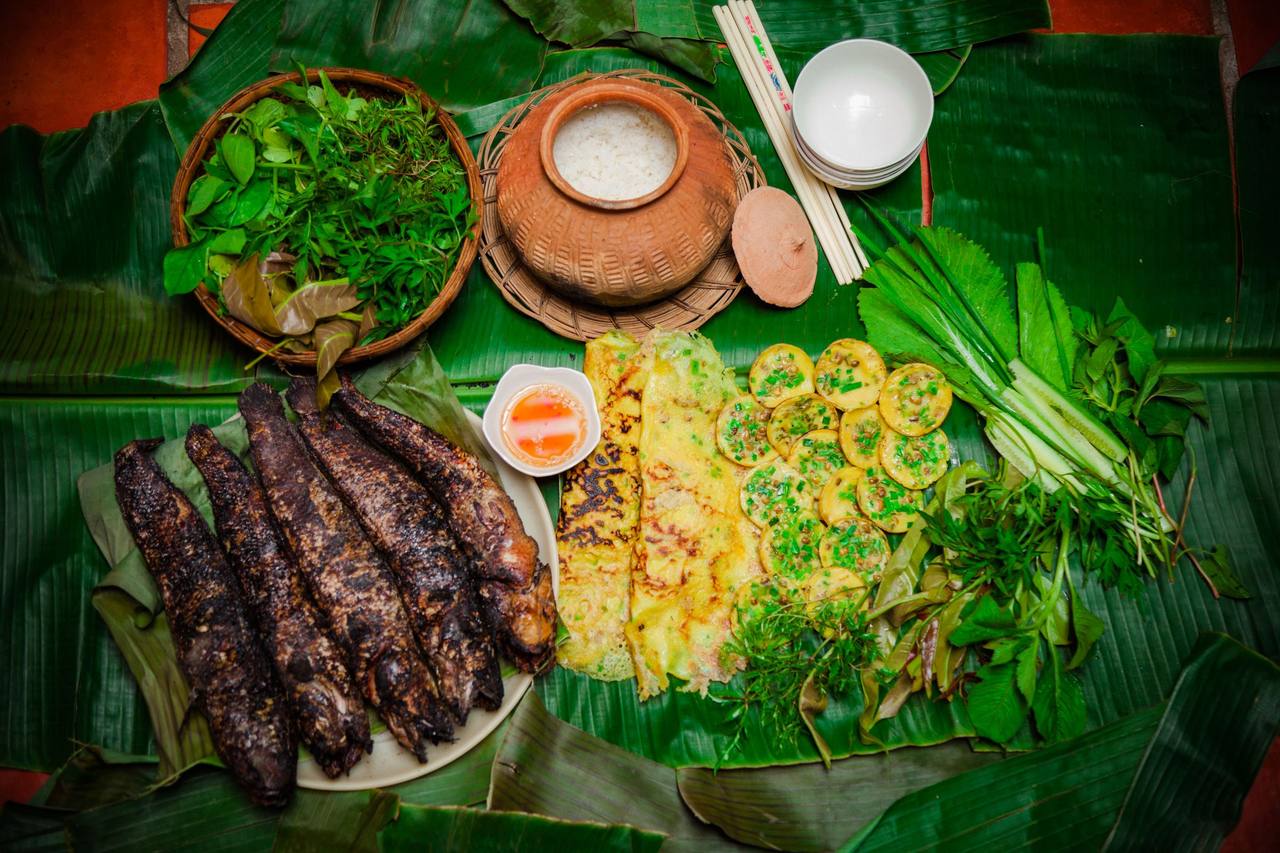
Snakehead fish grilled in straw
A whole snakehead of about 800 g grilled in burning straw, rolled in rice paper with herbs, fermented anchovy dip.
358,000 VNDMildFish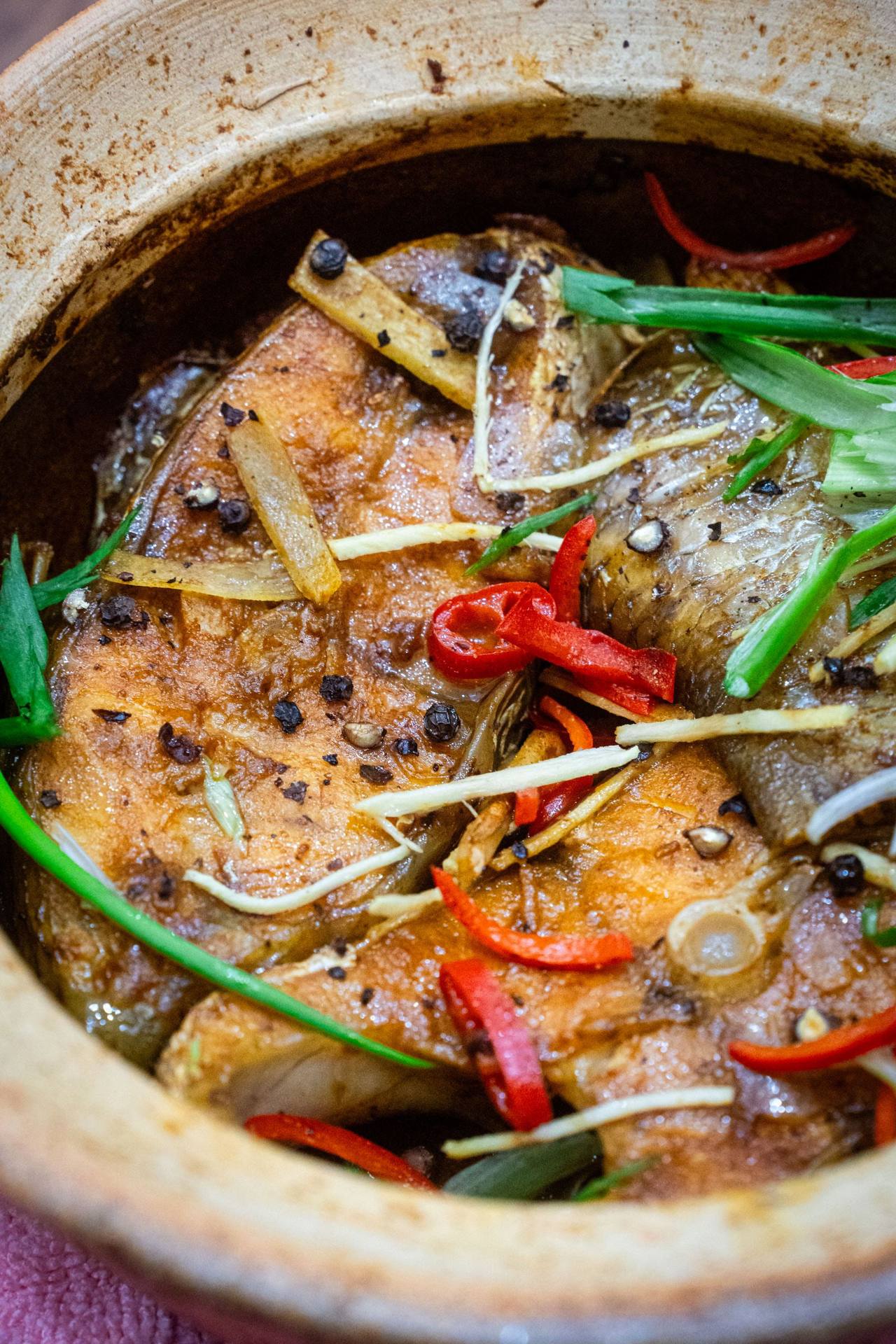
Snakehead braised in a clay pot
Snakehead braised in coconut caramel in a clay pot with green peppercorns and a slice of bird chilli.
178,000 VNDMildFish- Braises, soups and rice
Sour soup with snakehead
Snakehead with taro stem, pineapple, tomato, okra, bean sprouts and rice-paddy herb in a tamarind broth.
158,000 VNDMildFish